Quick answer
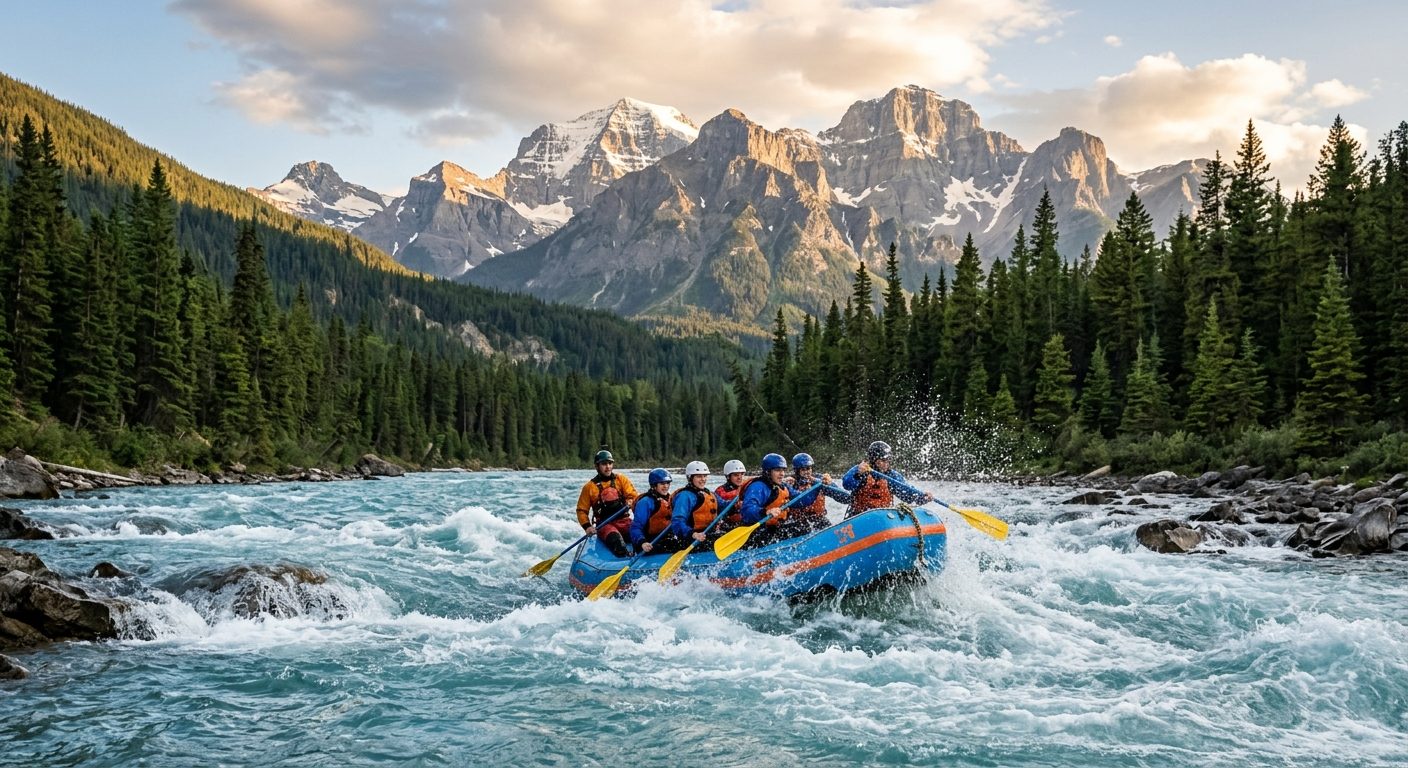
The banff rafting season runs from early May through late September, with commercial operators launching trips as soon as snowmelt raises water levels and continuing until cold temperatures and reduced flow make conditions unsuitable. Peak season spans mid-June through August, when glacial melt sustains strong currents, warm air keeps conditions comfortable, and outfitters run daily departures across all difficulty levels.
The Bow River carries roughly 40 percent more water in June than it does in September. That single fact shapes every decision about when to raft near Banff. Snowpack in the high country begins releasing in earnest during May, transforming placid winter channels into turbulent corridors of Class II and III rapids. By late June, glacier-fed tributaries contribute cold, steady flow that keeps rivers charged even as spring runoff recedes. August marks the sweet spot for families and first-timers—water remains robust, air temperatures peak, and hazards tied to extreme volume have passed. Runoff intensity varies year to year. A heavy winter dumps deeper snowpack, which translates to higher May and June flows and a longer stretch of aggressive conditions. Light winters yield mellower early-season water but can leave rivers too shallow by late August. Outfitters monitor gauge stations daily and adjust which stretches they run; a section considered advanced in June may rate as intermediate by September once the current slows. Water temperature climbs from near-freezing in May to tolerably cool by mid-summer, though glacier sources ensure it never feels warm. Wet suits remain standard issue through the banff rafting season guide, even during July heat. Morning departures between 09:00 and 14:00 align with the best arrival window, capturing stable light and moderate air temperatures before afternoon weather builds. Thunderstorms develop quickly in the Rockies during summer, and guides prefer launching before convective cells form over ridgelines. September offers a quieter alternative. Crowds thin, rivers mellow, and the landscape shifts into gold and rust tones. Flows drop to their annual lows, which limits rapid intensity but opens up technical rock gardens and slower stretches ideal for wildlife watching. Operators reduce trip frequency as the month progresses, and by early October most have pulled boats for the season. The window is defined not by calendar dates but by snow, melt, and the glaciers that govern everything downstream.
“The Bow River carries roughly 40 percent more water in June than it does in September, and that single fact shapes every decision about when to raft near Banff.”
Understanding the Banff Rafting Season and Water Conditions
The Banff rafting season primarily runs from May through September, with peak whitewater intensity occurring during the high-flow snowmelt period in June and early July. Mid-day visits provide the most consistent water temperatures and weather conditions for river navigation.
May to Early June
Low crowdsCooler, 5-15°C; snowmelt begins
Rivers rise as mountain snow melts, increasing flow intensity.
Late June to July
High crowdsWarmer, 15-22°C; peak flows
High water levels provide the most challenging and active rafting conditions.
August to September
Moderate crowdsMild, 10-20°C; lower water
Water levels recede, resulting in more technical and calmer rafting experiences.
Mid-day (09:00–14:00)
Peak activity—
This window offers the most favorable balance of ambient temperature and water conditions for excursions.
Verdict: The best time for rafting is between late June and July, aiming for the 09:00–14:00 arrival window to experience optimal water levels and weather.
Daily Operational Hours for Banff Rafting Season Excursions
Operational support for rafting excursions is available daily throughout the season. Visitors may coordinate their arrival times within the provided schedule.
| Monday | 08:00–18:00 | |
|---|---|---|
| Tuesday | 08:00–18:00 | |
| Wednesday | 08:00–18:00 | |
| Thursday | 08:00–18:00 | |
| Friday | 08:00–18:00 | |
| Saturday | 08:00–18:00 | |
| Sunday | 08:00–18:00 |
Banff Rafting Season Entrance Fees and Cost Structure
Access to Banff National Park for rafting excursions requires a park entry permit, while the rafting activities themselves are managed by independent commercial operators. Tour costs are independent of park entrance fees and vary by provider and excursion type.
Adults pay 0 CAD for park access, with total costs determined by the specific rafting operator chosen for the excursion.
Banff Rafting Season Pre-Visit Checklist and Gear Requirements
Prepare the right gear and documentation before heading to the river.
-
Book your rafting trip in advance — Tours fill quickly during peak snowmelt season (May–June).
-
Bring government-issued photo ID — Required by all commercial operators for waiver signing and age verification.
-
Pack quick-dry clothing and secure footwear — Cotton stays wet and creates hypothermia risk; closed-toe shoes prevent foot injuries on rocky riverbanks.
-
Apply reef-safe sunscreen before departure — High-altitude UV exposure intensifies on open water with no shade cover.
-
Secure waterproof storage for valuables — Phones, wallets, and keys often fall out during Class III rapids; operators provide dry bags.
-
Confirm weight and health restrictions with operator — Minimum weights (typically 40–50 kg) and certain medical conditions may exclude participants for safety reasons.
Getting to Your Banff Rafting Season Departure Point
Banff, Alberta, Canada is accessible via the Trans-Canada Highway (Highway 1). Most rafters reach their departure point by driving to central Banff or designated meeting areas.
Trans-Canada Highway (Hwy 1) to Banff exit
Roam Transit to Banff townsite
Local service to tour meeting points
Check availability
Frequently asked questions about banff rafting season
Everything you need to know about banff rafting season